Old Town Old Town Sportsman 120
A tank-tough, exceptionally stable flat-water fishing kayak that earns its reputation honestly — as long as you accept the weight and the windy-day tracking penalty of having no rudder.
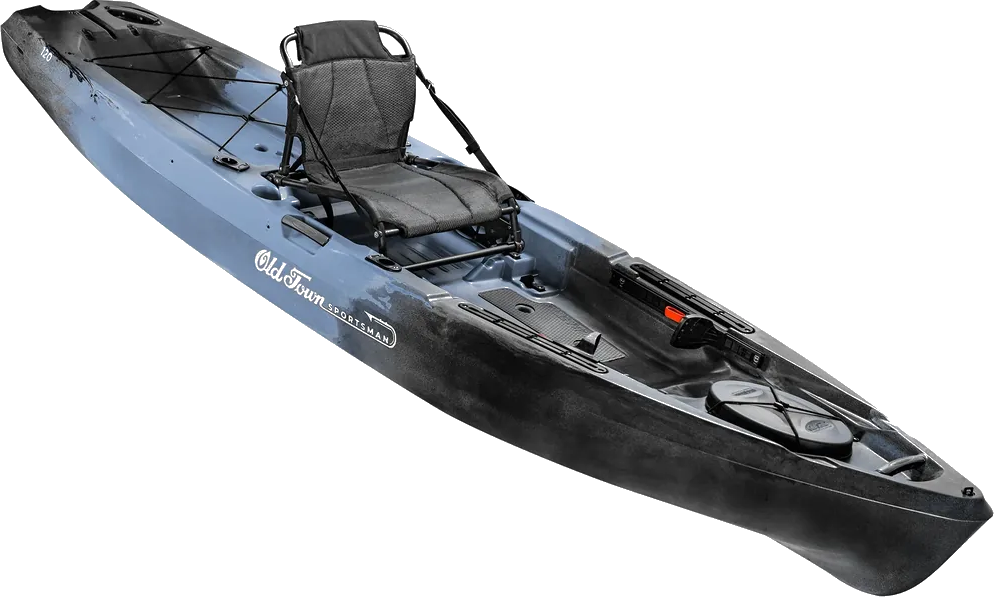
Best for: Beginner-to-intermediate kayak anglers fishing flat water, ponds, slow rivers and protected bays who prioritize rock-solid standing stability and durability over speed — and who have a way to move an 85 lb boat.
The good
- Outstanding standing stability — reviewers report standing and casting comfortably (some testing the nose) and call it 'almost impossible to flip'; supports anglers up to ~300 lb standing
- Genuinely durable single-layer polyethylene hull described as 'built like a tank' / 'virtually indestructible,' backed by Old Town's lifetime hull warranty
- Strong fishing fit-out for the price: comfortable adjustable high/low seat, three rod holders, two 18-inch accessory tracks, large rear tankwell and under-seat tackle storage
- Spacious, open cockpit accommodates standing and turning around; handles narrow rivers and even light rapids well for its size
The bad
- Poor tracking in wind — multiple reviewers note it wanders in strong wind and really wants a rudder it doesn't ship with
- Heavy: 85 lb makes solo car-topping and launches a real chore, a recurring owner gripe
- Shipping/QC defects reported by owners: at least one arrived with no protective wrap, a cracked footrest, hull gouges/scuffs, and a missing paddle holder and tackle box
- Accessory fit gaps: the included transducer mount didn't fit some fish finders (e.g., Garmin Striker 4), and one review flags missing rear gear tracks
Specs are consistent across Old Town's own page and independent reviews, so the data here is solid: 12 ft, 33.5 in wide, 85 lb, 500 lb capacity, ~$1,100. The stability and durability praise is near-universal and credible, not marketing fluff. The honest caveats are equally consistent — without a rudder it struggles to hold a line in wind, and at 85 lb it's a two-person carry for many. The QC/shipping complaints appear to be individual unit issues rather than a systemic design flaw, but they recur often enough that buyers should inspect on delivery.